The real worth
of what you buy.
Real prices. Better buys.
Insights worth knowing.
Miss Markdown is building a smarter way to understand what you buy, what you paid, how prices change, and when a better buying opportunity may be worth knowing about.
In development. Not yet available for download.

A smarter memory for what you buy
Your shopping history should work for you.
Most of what a household spends goes on the same few dozen things, bought again and again. The information needed to buy them well already exists. It is just scattered across receipts, apps, and memory.
Miss Markdown is being designed to help households understand:
- what you buy
- what you paid
- how often you buy it
- how prices change over time
- where a better price may exist
- whether a sale is actually a good deal
- when something may be worth buying now, or waiting on
How it works
Three steps, quietly running in the background.
-
Remember
Miss Markdown builds context around the things you buy and the prices you have paid.
-
Compare
It helps surface meaningful price differences, history, and alternatives.
-
Know
Miss Markdown turns that information into useful shopping insight before you spend.

The point of all this
Worth Knowing.
The kinds of things Miss Markdown is intended to tell you, in plain language, at the moment it matters.

-
You’ve paid less before.
A current price may be higher than what you usually pay.
-
This one looks good.
A current price may compare favorably with recent prices.
-
Another store may be worth checking.
A meaningful price difference may exist elsewhere.
-
You may be due for this soon.
Purchase history may help anticipate recurring household needs.
These are examples of intended product behavior. Miss Markdown is in development, and nothing shown here reflects live retailer pricing. Any prices, dates and stores shown are fictional.
Not another coupon app
More than deals.
Miss Markdown is not being built around endless coupon hunting or flashing SALE badges. The goal is to understand the context behind a purchase, so households can make better decisions with less effort.
Historical context
What this item has actually cost you over time.
Purchase intelligence
Understanding the things you buy repeatedly.
Price awareness
Knowing when a number is good, ordinary, or high.
Recurring items
Recognising the staples a household runs on.
Cross-retailer view
Where a meaningful difference may exist.
Personal relevance
Insight about your basket, not everyone’s.
What we’re building
A shopping app that remembers for you.
Early concepts for the Miss Markdown experience. Design in progress. Sample figures throughout are fictional.
Worth knowing today
You’ve paid less before.
Rolled oats, 42 oz (usually $4.28)
You may be due for this soon.
Laundry detergent (every ~7 weeks)
Recent purchases
Rolled oats, 42 oz
Price history
This one looks good.
Below your recent average
Laundry detergent
Another store may be worth checking.
A meaningful difference across recent prices
Concept designs shown for illustration. All product names, stores, and prices in these screens are fictional examples and do not represent live data from any retailer.
Built for real households
Shopping intelligence without the homework.
Most households do not want another spreadsheet, price book, or weekly research project. Miss Markdown is intended to do the remembering and comparison work behind the scenes, and surface something useful when it matters.
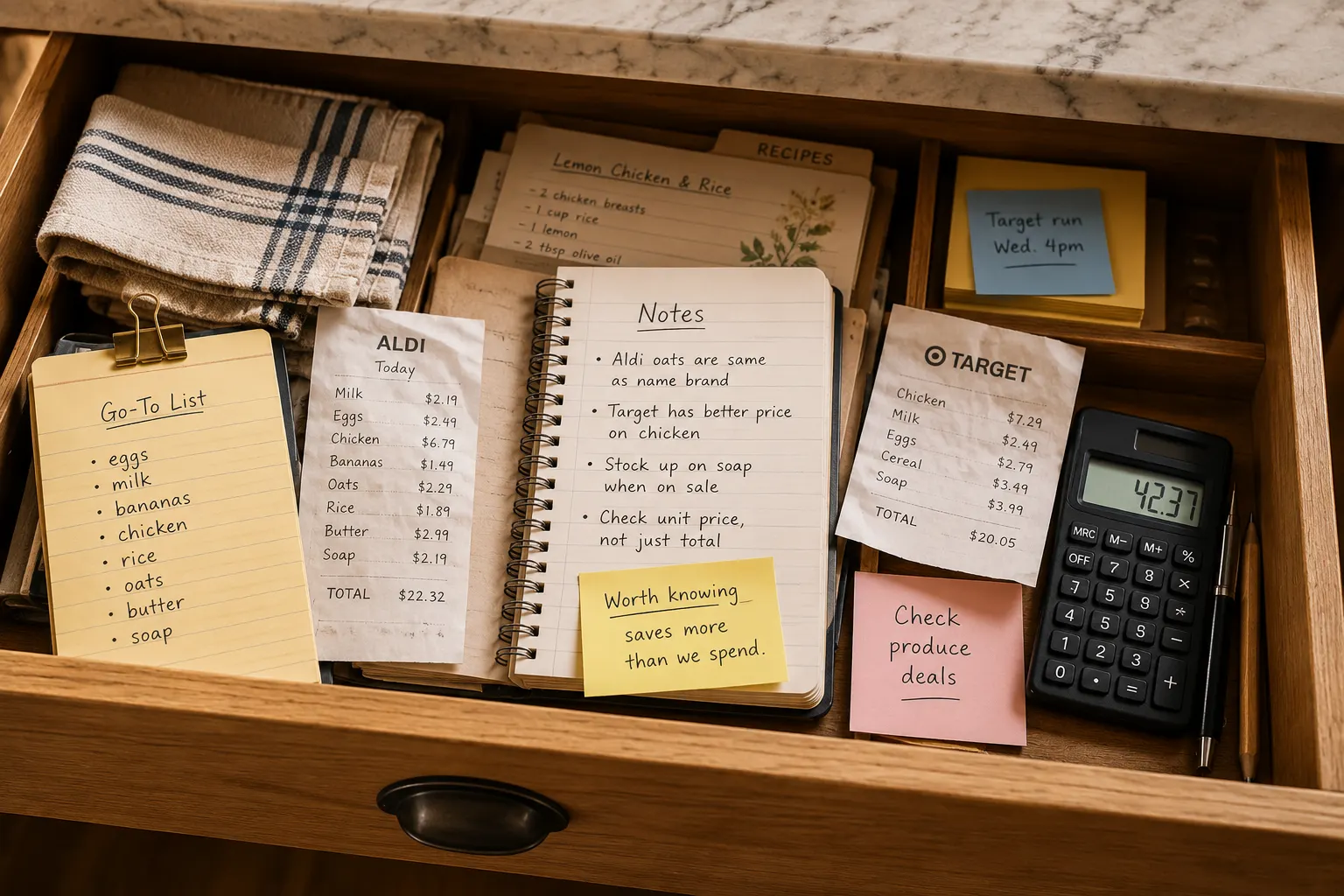
The kind of practical shopping sense that used to live in a kitchen drawer, kept up to date, and in your pocket.
Illustration. The lists, receipts, and store names shown are fictional examples, not live retailer data, and not a partnership with any retailer.
For partners and reviewers
Building the intelligence behind better buying decisions.
Miss Markdown is developing consumer shopping-intelligence technology that combines purchase history, product data, and pricing information to help users better understand the value and timing of everyday purchases.

Purchase data
Structured, household-scoped records of what was bought and paid.
Product information
Durable product identity independent of any single retailer’s naming.
Pricing intelligence
Price observations over time, and what they mean in context.
Retailer data sources
Evaluated and integrated where terms permit.
Purchase context
History that makes a single price meaningful.
Consumer recommendations
Plain-language insight, grounded in evidence.
Miss Markdown is a product of Harrison Technology Group, currently in development. We evaluate and integrate commerce data sources under their published terms. If you represent a retailer, data provider, or affiliate network and would like to understand our use case, get in touch.
Worth knowing when we’re ready.
Miss Markdown is currently in development. We’re building the first version now.
Prefer to ask something first? Contact us. We’ll only use your address to let you know when Miss Markdown is available.